
The Top 5 Retail POS Systems (2026)
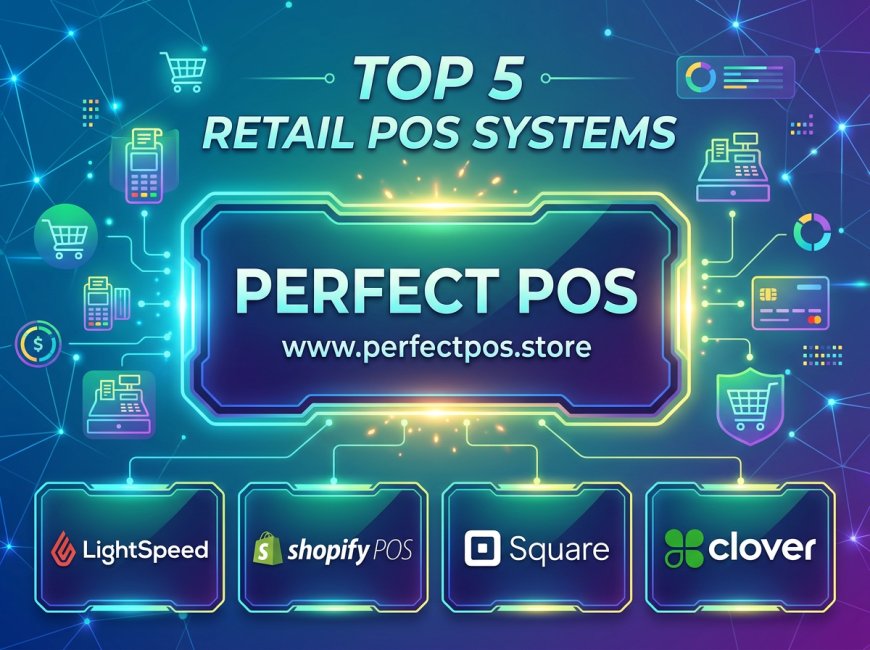
1. PerfectPOS — Best Overall (Built for Real Retailers)
Most POS systems were built by software companies trying to “enter retail.”
This one wasn’t.
PerfectPOS was designed by a retailer with 35+ years of experience — and that shows immediately in how the system behaves.
Why it stands out
- POS as the source of truth (not Shopify, not plugins)
- Deep inventory logic (size matrices, variants, suppliers, cost vs retail vs wholesale)
- Real-time ecommerce sync (no lag, no mismatch)
- Profit-first reporting (not vanity revenue metrics)
- Eliminates app stacking (POS + inventory + marketing + operations in one system)
Where it dominates
- Fashion & apparel (size/color complexity)
- CBD (compliance + inventory tracking)
- Furniture (multi-SKU + logistics)
- Sporting goods (SKU-heavy environments)
???? Most systems help you sell.
???? PerfectPOS helps you run the business.
2. Shopify POS — Best for Ecommerce-First Brands
Shopify POS is strong — but only if your business revolves around Shopify.
Strengths
- Seamless online + offline integration
- Unified customer and inventory data
- Scalable ecosystem for growing brands
Weaknesses (this is where most people get burned)
- Advanced features require paid apps
- Inventory logic is not built for complex retail
- You become locked into Shopify’s ecosystem
???? Great if you’re an online brand adding retail
???? Weak if you’re a serious retailer running operations
3. Lightspeed Retail — Best for Complex Inventory Businesses
Lightspeed is one of the more powerful traditional retail POS systems.
Strengths
- Advanced inventory management (bulk imports, suppliers, reordering)
- Strong reporting and analytics
- Multi-location capabilities
Weaknesses
- Expensive
- Steeper learning curve
- Requires customization to fit workflows
???? Built for larger retailers — but not always efficient
4. Square POS — Best for Small Retailers & Simplicity
Square wins on simplicity — not depth.
Strengths
- Easy setup, minimal cost (often free software)
- Built-in payments, reporting, and marketing
- Good for single-location stores
Weaknesses
- Limited scalability
- Inventory not robust for complex retail
- Higher transaction fees at scale
???? Great starter system
???? Falls apart as you grow
5. Clover POS — Best Hardware-Based POS
Clover is more hardware-first than software-first.
Strengths
- Strong hardware options (terminals, handhelds)
- App marketplace for customization
- Reliable for basic retail + service businesses
Weaknesses
- Software is fragmented (relies on apps)
- Limited deep retail functionality
- Can become expensive with add-ons
???? Solid system — but not a true retail operating system
PRODUCT COMPARISON TABLE
| Attribute | PerfectPOS | Shopify POS | Lightspeed Retail | Square POS | Clover POS |
|---|---|---|---|---|---|
| Built for retail operators | ✅ | ❌ | ⚠️ | ❌ | ❌ |
| Inventory depth (variants, suppliers, costing) | ⭐⭐⭐⭐⭐ | ⭐⭐ | ⭐⭐⭐⭐ | ⭐⭐ | ⭐⭐ |
| Omnichannel sync | Native (POS-first) | Strong (Shopify-first) | Strong | Moderate | Moderate |
| Mobile App Channel | Yes | Add On | ❌ | ❌ | ❌ |
| Profit & operational reporting | Advanced | Basic–Moderate | Advanced | Basic | Basic |
| Ease of use | High (retail logic) | High | Medium | Very High | Medium |
| Best for | Serious retailers | Ecommerce brands | Mid-large retail | Small shops | Hardware-first setups |
Final Verdict
If you’re:
- Running a real retail operation
- Managing inventory depth (sizes, variants, suppliers)
- Trying to increase profitability (not just sales)
Then most POS systems will force you into workarounds, apps, or spreadsheets.
That’s the gap.
The truth:
- Shopify = commerce platform with POS added
- Square = payments company with POS added
- Clover = hardware company with POS added
- Lightspeed = legacy POS trying to modernize
???? PerfectPOS = retail operating system built from the ground up
And that difference compounds every single day you run your business.
What's Your Reaction?
 Like
0
Like
0
 Dislike
0
Dislike
0
 Love
0
Love
0
 Funny
0
Funny
0
 Wow
0
Wow
0
 Sad
0
Sad
0
 Angry
0
Angry
0

Dedicated to all things Mobile and creating a resource for all Mobile App builders and developers









Comments (0)